Editorial Update (November 21, 2026): This chapter was revised after its publication-date slot. Its current text may incorporate information and sources published later than that date. The journal’s dates preserve the daily chapter sequence.
Past to the Future | Volume 8 | Part 4
Historical scope: global cellular telephone evolution, smartphones, 2G to 5G, mobile money, education, labor, access and privacy through November 2026. Fictional scenes explicitly identified. Includes dated ITU and GSMA research.
The Message That Crossed A City
In a fictional household in Lahore in 2003, a student named Amina waited for a text message from her brother, who worked across the city. The family’s phone had a small monochrome screen and buttons that required several presses to enter a single letter. Yet its arrival had changed something important. A message no longer required a landline at a fixed address, and a late journey could be explained while it was still underway.
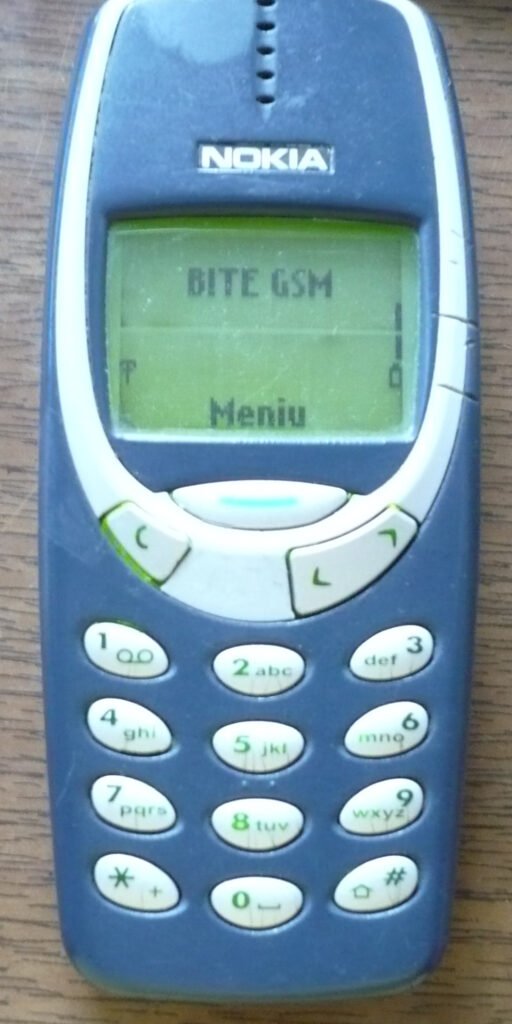
Amina and her family are invented narrative devices, not historical witnesses. The featured Nokia 3310 photograph illustrates a real handset introduced in 2000 and is explicitly not an image of that fictional family. What matters is the broader transformation in mobility, personal contact and expectations of availability that accompanied the spread of cellular telephony.
The previous chapter The Web, Search And Open Knowledge examined publishing and discovery through computers. Mobile connectivity placed communication in people’s pockets, changing where information could be accessed and who was expected to respond.
Mobile Communication Predated The Smartphone
Wireless voice communication emerged from decades of radio engineering, public regulation and work on cellular networks. Mobile telephones existed before touchscreens, application stores and continuous internet connectivity. Early systems were bulky, expensive and available to relatively few subscribers. Portable commercial cellular handsets reached markets during the 1980s as technical and regulatory arrangements developed.
Cellular networks divide coverage areas into cells so radio spectrum and base stations can serve users as they move. The ability to hand a connection between cells is central to mobility, but coverage can be interrupted by geography, congestion, equipment failure or inadequate investment. A phone is only one part of a system involving towers, switching facilities, spectrum and maintenance workers.
The International Telecommunication Union’s digital development resources show why infrastructure remains central to access. Even widespread network coverage cannot guarantee that every household can afford a suitable device or service.
Second-Generation Networks Brought Digital Voice
Second-generation cellular systems became influential during the 1990s, replacing or supplementing analog networks in many markets. The GSM standard enabled digital voice communication and helped popularize the removable SIM card and short message service. The history varied by country because operators used different standards, frequencies and licensing policies.
Digital signaling allowed operators to manage growing numbers of subscribers and offered new forms of messaging. But devices and networks still had limited bandwidth compared with later mobile internet services. A phone user could send brief text reliably in a city without possessing what would later be called a smartphone.
The distinction matters because mobile communication spread through ordinary calling and messaging before the rise of app-based commerce. The social change was already visible in how families organized transport, employment and daily appointments.
Text Messaging Changed Everyday Language
SMS allowed subscribers to exchange short written messages without requiring both participants to be available for a voice call. Users developed abbreviations, social expectations and local practices shaped by message prices and keypad limitations. Short texts were useful in busy workplaces, shared households and places where speaking aloud would be inconvenient.
Messages became evidence of relationships and commitments as well as tools for coordination. A school could inform parents of a change, a worker could confirm an assignment, and friends could arrange to meet. At the same time, the expectation of immediate response could place new pressure on personal time.
The change belongs to a longer history of communication discussed in The Reformation And The Printed Word. Different technologies alter how people communicate, but they do not remove misunderstandings, unequal literacy or the need to judge the reliability of information.
The Feature Phone Was A Significant Technology
Many early mobile handsets combined voice calls, SMS, contact lists, calendars and simple games. Their screens were small, and text input could be awkward, yet they offered durability and battery life valuable to users without frequent charging. They were not primitive mistakes awaiting replacement; they met important needs under the conditions of their time.
Prepaid calling plans and inexpensive handsets helped extend access to people who could not qualify for contracts or predict monthly bills. Shared devices and informal repair markets supported use where household incomes were limited. Owners often treated a handset as an investment that could be maintained for years.
The GSMA’s 2025 mobile connectivity research notes that feature phones continue to matter in some markets. A global digital history should not assume that every person moved through exactly the same sequence of products.
Third-Generation Services Expanded Data Access
Third-generation mobile networks, deployed increasingly during the 2000s, made richer data services more practical. Browsing, email and multimedia communication became possible on a wider range of handsets, although speeds and pricing varied. Operators had to invest in infrastructure, backhaul capacity and new devices before customers experienced the promised improvements.
Advertised bandwidth was not the same as reliable service in a moving vehicle or crowded neighborhood. A strong signal could coexist with slow data because many subscribers shared network resources or the operator’s links to the wider internet were constrained.
The experience shows why technology adoption cannot be measured solely by whether a standard exists. Affordability, device quality and practical reliability determine whether a new capability changes ordinary life.
The Smartphone Combined Several Older Devices
Smartphones did not appear out of nowhere in 2007. Earlier devices from firms such as IBM, Nokia, Palm, BlackBerry and others combined communication, calendars, email or computing in various ways. Some were aimed at business users and required specialized service plans. Others experimented with touch interfaces or mobile browsing.
Apple’s original iPhone announcement in January 2007 helped popularize a different consumer interface centered on multi-touch interaction, a full web browser and a design integrated with software. Android-based smartphones entered the market soon afterward and expanded competition among manufacturers, carriers and operating systems.
Neither development made all older phones obsolete immediately. Markets remained diverse, and consumer adoption depended upon local prices, network quality and access to compatible software. The history is best understood as competition among evolving designs rather than one inventor creating mobile computing single-handedly.
Applications Changed The Phone’s Purpose
Mobile application ecosystems allowed developers to distribute tools for navigation, communication, photography, education and entertainment. Software could be updated after a phone was purchased, changing what a device was useful for during its life. Application stores simplified discovery and payment but also concentrated power in the organizations deciding which programs could appear.
Developers encountered platform rules, fees, review systems and restrictions on access to device features. Those arrangements could improve security and consistency while narrowing opportunities for independent distributors. Business models such as subscriptions and advertising shaped which applications received investment.
The earlier From Mainframes To Personal Computers chapter traced how software made hardware valuable. Smartphones extended that principle by turning an everyday communication device into a programmable platform.
Cameras Altered How Events Were Documented
As mobile cameras improved, many people gained the ability to record photographs and video without carrying separate equipment. Family events, neighborhood problems, demonstrations and accidents could be documented by those present. The result expanded personal expression while changing the speed at which images circulated.
A photograph can be evidence without being a complete account. It may omit what happened before a recording began, capture only one perspective or travel online with a misleading caption. Verification of date, place and context became important as publishing became easier.
Images could protect against denial of abuses, but they could also expose vulnerable people without consent. The social consequences of a camera depend on how it is used and on the institutions that respond to what it reveals.
Navigation Became An Everyday Service
Global positioning technology, mapping software and mobile network access made turn-by-turn directions increasingly common. Users could find a route, identify a service or coordinate a meeting without carrying a printed map. Maps also helped emergency workers and businesses manage transport under difficult conditions.
Digital navigation relies on satellite positioning, updated geographic data, local road information and software able to interpret it. Errors can occur when streets change or mapping data lacks local knowledge. People may become reliant on a service whose underlying decisions they cannot easily inspect.
Navigation services illustrate the overlap between public infrastructure and commercial platforms. A widely available tool can make daily life easier while raising questions about location records and the privacy of users.
Mobile Money Was Not Simply Online Shopping
Mobile payment systems developed under different banking and telecommunications conditions. In some countries, phone-based accounts and agents helped people transfer money even without traditional bank branches. The launch of M-Pesa in Kenya in 2007 became a prominent example of how mobile networks could support domestic remittances and other financial services.
Access to mobile money could reduce travel and transaction costs for some users. Nevertheless, fees, account security, fraud, regulation and service outages created risks. People who lacked identification documents or accessible agents could remain excluded.
The historical significance lies in adapting communication infrastructure to financial needs rather than copying wealthy-country credit-card systems. Different markets discovered different ways to turn a phone into a practical economic tool.
Emergency Communication Was Both Powerful And Fragile
Mobile networks can help people seek assistance during illness, floods, earthquakes and other emergencies. Text alerts and location-sharing services can improve coordination among families and public agencies. But disasters can damage towers, electricity supplies and transmission links precisely when demand rises.
Emergency planning therefore requires backup power, multiple channels of communication and attention to people without smartphones or sufficient literacy. Authorities should not assume that a public message reaches everyone merely because it was sent through a popular application.
The lesson extends the public-health and infrastructure concerns of Development, Medicine And The Global Economy. Technology contributes to resilience when institutions plan for failure as well as ordinary operation.
Fourth-Generation Networks Increased Capacity
Fourth-generation mobile networks, commonly associated with LTE, expanded mobile broadband capacity and supported the growth of video, cloud services and applications that expected continuous data. Deployment began in some markets around the end of the 2000s and spread through the following decade.
Network improvements depended upon additional spectrum, infrastructure and more capable handsets. Increased capacity encouraged new businesses and media formats, while heavier usage required operators to keep upgrading. Higher-quality video created demand that earlier networks were not designed to serve at scale.
Such changes were uneven. Urban customers often gained newer services sooner than residents of remote regions where commercial returns on infrastructure investment were less certain.
Fifth-Generation Coverage Is Unequal
Fifth-generation services began commercial deployment toward the end of the 2010s. Their capabilities include greater network capacity and support for different applications, but performance depends on spectrum bands, equipment and local conditions. Not every service advertised as 5G delivers identical speed or coverage.
The ITU Facts And Figures 2025 report documented significant expansion of 5G coverage alongside persistent concentration in richer countries. The ITU’s 2026 report announcement likewise notes substantial remaining gaps in meaningful connectivity.
Being within reach of a network is not the same as owning a suitable handset or being able to afford a data package. Comparing national coverage percentages without examining income, gender and geography can produce misleading optimism.
The Mobile Divide Is Not One Problem
Access depends on coverage, affordability, digital skills, language, disability accommodation and social permission to use devices. A household may have a connected phone but several people competing for it. A woman may live in a covered region while facing barriers to independent ownership or use.
The GSMA State Of Mobile Internet Connectivity 2025 examines these barriers across countries. Its findings should be interpreted as estimates with particular methods and dates, not permanent facts that automatically describe every village.
Policy responses differ accordingly. Building a tower may help a remote community, while another neighborhood needs affordable service, accessible interfaces or training. Counting connections alone can hide the difference.
Education Moved Beyond A Fixed Classroom
Mobile connectivity gave students access to dictionaries, videos, textbooks, messaging groups and remote instruction. Learners could consult information during travel or outside school hours. Teachers used mobile platforms to communicate assignments and maintain contact with families.
Benefits depended upon a quiet place to study, data affordability, suitable content and the ability to evaluate information critically. A small screen could make complicated documents difficult to read. Devices also introduced distractions and privacy concerns affecting children and teachers.
During emergency school closures, the difference between having a phone and having an effective learning environment became especially visible. Education requires institutional support, not just an internet connection.
Work Could Follow People Home
Smartphones allowed employees and independent workers to respond to messages, schedule appointments and manage tasks away from a central office. This flexibility helped some people balance responsibilities and expanded opportunities for remote services.
Constant connectivity also blurred boundaries between paid work and personal time. Employers and clients could expect responses during evenings or family commitments. Gig-economy applications coordinated labor through software that sometimes obscured how pay rates and assignments were determined.
The distribution of benefits and burdens depended upon bargaining power and labor protections. Convenience for a customer is not proof of fair working conditions for a delivery worker or driver.
Health Information Became More Immediate
Mobile services supported appointment reminders, educational messaging, remote consultations and some forms of health monitoring. In areas with few clinics, communication with a trained professional could reduce unnecessary travel or help identify an urgent problem sooner.
However, medical advice through a phone is only as reliable as its source, the available information and the systems available for follow-up. A digital consultation cannot replace physical examination or emergency treatment whenever those are required.
Privacy matters particularly in health contexts because messages and stored records can expose sensitive information. A useful service should protect individuals rather than assume that every user can safely share a device with others.
Personal Communication Developed New Expectations
People came to expect that loved ones could be reached from almost anywhere. This facilitated caregiving across distance, migration and travel. A short voice message could carry comfort between relatives living in different countries.
Yet an unanswered call could become a source of anxiety, and constant social updates could change how people interpreted absence or attention. Mobile communication made contact easier while altering expectations about availability.
The fictional Amina eventually receives her brother’s message and feels relief, but that moment is not evidence that mobile technology eliminated social uncertainty. Human needs for trust, patience and privacy continued alongside technical progress.
App Ecosystems Concentrated Control
Mobile operating systems and application stores created valuable platforms for developers, but they also gave a few firms considerable power over software distribution, payments and default services. Developers could gain access to global customers while depending upon rules set by the platform owner.
Consumer protection, malware prevention and quality standards offered legitimate reasons for review, while restrictions on competition and fees became subjects of legal and policy debate. Different governments developed different responses, often changing over time.
The question was no longer whether a device could run a program. It was also who could authorize its distribution and how users could exercise meaningful choice.
Privacy Became A Portable Issue
Phones contain contacts, photographs, communications and sometimes detailed location histories. Applications may request permissions that permit access to data unrelated to their immediate function. These capabilities can support useful services while creating opportunities for surveillance and commercial tracking.
Users need understandable settings and institutions that limit misuse. But the existence of a permission screen does not ensure informed consent when people face complex agreements or have no realistic alternative to a dominant service.
A later chapter, Data, Privacy And Surveillance, examines these issues more fully. Their origins belong to everyday connectivity because a device carried everywhere creates records of daily life.
The Environmental Cost Of Replacement
Mobile phones depend on mining, sophisticated manufacturing, energy and global transportation. Frequent replacement creates electronic waste, even when a device remains technically capable of useful work. Repair restrictions and limited software support can shorten the practical life of hardware.
Recycling can recover some materials but does not eliminate environmental costs. Responsible policy may include safer collection, repair opportunities, durable designs and protections for workers in manufacturing and waste processing.
The digital economy is material. The convenience of communication rests upon people, minerals, factories and electricity that remain invisible on a phone’s home screen.
Who Was Still Offline In 2026
The ITU’s 3 November 2026 findings reported that approximately two billion people remained offline. This is an estimate about internet use, not a claim that all these people lacked mobile coverage or a phone.
Affordability and digital skills remained important barriers, while infrastructure and accessibility varied among rural areas, countries and income groups. Newer network technology did not automatically resolve the problem of meaningful participation.
The statistic should be read as a checkpoint rather than a prediction. Its importance lies in showing that decades of technological progress could coexist with exclusion from opportunities that connected people increasingly took for granted.
The Device And The Human Relationship
At the close of the invented scene, Amina looks at her older keypad phone and then at a newer smartphone displayed in a shop. Each represents a different stage of engineering, but she understands that neither device can decide what her brother should say or whether the family will listen carefully.
Mobile communication transformed daily life through portability, messaging, maps, payment services, work and access to knowledge. It did not distribute benefits equally, and it brought new dependencies on networks, platforms and data practices.
The next chapter examines social platforms and the attention economy. Once people carried connected screens, communication services began competing not only to deliver messages, but to shape what users watched, shared and believed.
Historical Sources And Fictional Method
Amina and her family are fictional. The chapter uses the International Telecommunication Union’s 2025 digital development report, the ITU’s November 2026 update, the GSMA mobile connectivity research and the Computer History Museum technology timeline. The featured Nokia 3310 photograph is public domain and does not depict any imagined character.