Editorial Update (November 21, 2026): This chapter was revised after its publication-date slot. Its current text may incorporate information and sources published later than that date. The journal’s dates preserve the daily chapter sequence.
A Coastline On Three Maps
In a fictional coastal planning office in 2026, an engineer named Samira spread three maps on a table. Each represented a different possible future for the same district, based on changing emissions, sea level and local protection. The maps did not show three worlds that already existed. They were scenarios intended to help residents ask which risks they could reduce and which decisions could not safely be postponed.
Samira and the conversation are imagined, not documentary evidence. The preceding chapter The Future Cannot Be A Historical Fact established the method for this final volume: describe observed change as fact and future outcomes conditionally. The IPCC 2023 synthesis offers scientific assessments of warming pathways, while the UNEP Emissions Gap Report 2026 examines the gap between national commitments and emissions reductions associated with different climate goals.
Human-Caused Warming Is Already Observed
Climate change is not a future-only issue. Greenhouse gas emissions from human activities have already caused global warming, with significant impacts on weather, ice, oceans and communities. The degree and pattern of impacts vary among regions and social groups.
The IPCC concludes that human influence on the climate system is unequivocal. That finding does not mean every individual storm can be attributed to one cause, or that every location experiences identical changes. Scientific confidence and careful descriptions of uncertainty are compatible.
Pathways Depend Upon Decisions
Future greenhouse gas emissions will be affected by electricity systems, transport, industry, land use, technology and policy. Scientists compare possible pathways because no single political and economic future is predetermined.
A pathway can describe a low-emissions transition, intermediate changes or continued high emissions. Its results are conditional on underlying assumptions, not a prophecy. Readers should ask what policies, technologies and behavioral patterns would be needed for a pathway to occur.
Warming Levels Are Not Deadlines On A Calendar
A temperature threshold describes a level of global warming relative to a defined reference period. It does not imply that one exceptionally warm year alone establishes a long-term threshold under every scientific or legal interpretation.
The IPCC synthesis summary evaluates warming under emissions scenarios and identifies risks that rise with additional warming. The way temperature is averaged and the period used for comparison should be stated whenever numerical claims are made.
The 2026 Emissions Gap Is A Current Assessment
The UNEP report launched in October 2026 estimated that current policies point toward approximately 2.8 degrees Celsius of warming this century. Full implementation of countries’ latest pledges was assessed as leading to about 2.6 to 2.7 degrees Celsius.
These are conditional assessments made with current information, not guarantees about conditions in 2100. Policies, emissions and scientific understanding may change. Their significance lies in showing a substantial gap between present action and pathways associated with more limited warming.
The Magnitude Of Overshoot Matters
Some pathways temporarily exceed a temperature target before potentially returning toward it later in the century. The magnitude and duration of overshoot affect risk, including the possibility of impacts that are irreversible on relevant human timescales.
The UNEP 2026 Emissions Gap Report calls attention to the scale of reductions required for a return pathway. A future removal of carbon dioxide cannot simply be assumed to undo every prior loss of biodiversity, ice or human security.
Mitigation Changes The Source Of Risk
Mitigation involves reducing greenhouse gas emissions and, where appropriate, increasing removals from the atmosphere. It can involve energy systems, industrial processes, agriculture, buildings and transport.
The practical effects differ among sectors. Electrifying a service may reduce fossil fuel use if electricity is supplied with low-emissions sources. Improving efficiency can reduce demand, but the size of the benefit depends on how people and firms respond. Policy decisions should be evaluated with life-cycle and system-level evidence.
Adaptation Reduces Harm Under Changing Conditions
Adaptation seeks to reduce vulnerability to climate-related risks through measures suited to local conditions. Flood warnings, stronger water management, heat-health plans and improved land-use decisions can protect people even as emissions policy remains contested.
But not every impact can be adapted away. Limits arise from ecological thresholds, cost, technology and social conditions. An adaptation plan should not be presented as a substitute for mitigation or as a promise that every threatened place can remain unchanged.
Different Places Face Different Hazards
Coastal settlements, mountain regions, arid areas and tropical cities face different combinations of warming, water stress, flooding and ecosystem change. The distribution of risk also depends upon housing, public services, income and the ability to move.
Samira’s fictional maps include a port, a fishing village and a low-income neighborhood. Their hazards overlap, but their resources differ. A single national average would obscure the residents’ different options for protecting livelihoods and homes.
Sea Level Rise Changes Long-Term Planning
Sea level rise is driven in important part by the warming of seawater and the loss of land ice. Its local consequences also depend on land movement, tides, storms and coastal geography. These interactions are essential to planning defenses or evaluating relocation.
A building, road or water facility may be expected to operate for many decades. Decisions made today should consider future conditions within reasonable uncertainty ranges, not rely only on historical averages. Such planning must include the rights and preferences of people who may be displaced.
Heat Is A Public Health Challenge
Extreme heat can increase illness and death, particularly where people lack cooling, safe housing or accessible medical care. Outdoor workers, older adults and people with certain health conditions may face particular risks.
Heat-health warning systems can help, but alerts must reach users in languages and formats they understand. Communities need practical options such as shade, water, safe working hours and emergency assistance. A model’s accurate prediction is not enough if vulnerable residents cannot act on it.
Water Systems Depend Upon Institutions
Water availability reflects climate, geography, infrastructure and the way governments regulate use. Drought may become more damaging when aquifers are depleted or supply networks fail to reach certain neighborhoods.
Future planning can compare demand-management measures, storage, conservation and investment in public services. There is no universal answer that applies to every watershed. Local participation is essential because competing users experience different costs and benefits.
Food Security Has Several Causes
Climate change can affect crop yields, livestock, fisheries and food distribution through heat, rainfall and extremes. Yet hunger also depends on poverty, conflict, trade, storage and access to land and income.
Future agricultural scenarios should therefore examine social systems as well as growing conditions. Research on resilient crops may help under some circumstances, but farmers still need reliable markets, water and institutions. A technology cannot eliminate the economic causes of food insecurity by itself.
Ecosystems Cannot All Be Rebuilt
Forests, reefs, wetlands and other ecosystems provide services that support human livelihoods and biodiversity. Changes in temperature, land use and pollution can create interacting pressures, sometimes producing damage that restoration cannot fully reverse.
Protecting remaining habitats and reducing pressures can offer benefits across multiple pathways. However, conservation policies also affect local land rights and livelihoods. Their legitimacy depends in part on the participation of communities living within or near protected areas.
Risk Is Unequally Distributed
People with limited incomes may occupy more vulnerable housing, rely on climate-sensitive work or lack insurance. Children, older adults and people with disabilities may have additional needs during emergencies.
The IPCC 2023 synthesis describes uneven exposure and vulnerability. A policy that protects expensive property while ignoring high-risk neighborhoods cannot be evaluated solely by its economic efficiency. Fairness requires asking who receives protection and who bears the residual risks.
Historical Emissions Matter To Fairness
Countries differ in their contributions to cumulative greenhouse gas emissions, present wealth and technical capacity. International negotiations consider these differences when discussing responsibility and assistance.
A fair transition is not achieved by assuming that all countries can implement identical policies at identical cost. Support for adaptation, access to finance and cooperation on technology are part of the discussion. These arrangements require accountability because promises do not automatically become functioning projects.
Climate Finance Is A Means, Not An Outcome
Funding can help build resilient infrastructure or support emissions reductions, but its value depends on project design, governance and the terms of loans or grants. A large announced total may conceal delayed disbursement or difficult conditions for recipients.
Future scenarios should consider whether finance reaches local needs and whether communities can evaluate the results. A school protected from flooding offers a more concrete benefit than a financial commitment that never translates into construction or maintenance.
Technology Could Help Under Multiple Pathways
Solar power, energy storage, efficient equipment and other technologies may reduce emissions where they fit local systems. Better forecasting can improve preparedness. Scientific innovation could create additional options over time, but no undeveloped invention should be assumed as a guaranteed rescue.
The next chapter, Energy Futures And Difficult Tradeoffs, will explore power systems in greater detail. The question here is how technology interacts with institutions, costs and the urgency of reducing risk.
Negative Emissions Need Careful Accounting
Some climate pathways include removal of carbon dioxide through forests, soils or engineered systems. Each approach has constraints involving durability, land, energy, measurement and possible impacts on communities.
A model assuming very large future removals should disclose the technological and governance assumptions involved. Reductions in present emissions cannot be responsibly postponed merely by asserting that future generations will remove unlimited amounts of carbon dioxide.
A Map Cannot Settle A Political Disagreement
Samira’s three maps show different possible patterns of risk. They cannot determine whether a neighborhood should receive a sea wall, whether residents should move or who must pay. Those are social and political choices informed by scientific evidence.
Communities should be able to challenge the assumptions behind assessments and explain which livelihoods, cultural sites and relationships may be affected. Public participation can improve decisions even when it does not produce unanimity.
Early Warnings Require Human Capacity
Climate monitoring, forecasting and communications systems can reduce the consequences of storms and flooding. Digital networks help distribute warnings rapidly, but access remains unequal.
The earlier chapter Digital Divides And Unequal Opportunity documented why connectivity does not guarantee that everyone receives or understands information. Effective warning systems need trusted local institutions, accessible messages and practical evacuation options.
International Cooperation Could Reduce Costs
Climate processes cross national borders, and many technologies depend upon international trade. Collaboration on research, standards and finance can help governments learn from one another and pursue shared goals.
Yet countries have distinct interests, domestic constraints and different capacities. An agreement may improve cooperation without eliminating every conflict. Scenarios should describe the institutions and incentives required to sustain collaboration rather than assume harmony will emerge automatically.
Fragmentation Could Increase Vulnerability
A more fragmented world might experience weakened research exchange, trade restrictions and delayed assistance during disasters. Such conditions could make some climate responses more expensive or less effective.
Fragmentation would not necessarily mean that all cooperation disappears. Local and regional partnerships might continue. The value of a scenario lies in examining these mixed possibilities rather than declaring a uniform future of complete conflict.
The Cost Of Waiting Is Also Unequal
Delaying emissions reductions can influence the magnitude of future warming and the scale of adaptation challenges. The consequences are not distributed equally across generations or regions.
People who will live with long-term impacts cannot directly participate in every current decision. Intergenerational responsibility therefore includes considering risks imposed on those who inherit infrastructure, emissions and damaged ecosystems without having chosen them.
A Plan Should Have Signposts
Climate strategies can identify indicators such as emissions trends, the condition of infrastructure, local heat exposure and access to adaptation funding. These measures allow governments to revisit plans when conditions change.
Monitoring should not become a decorative reporting exercise. Institutions need authority and resources to change course when evidence shows that a program is failing or creating unintended harm.
Different climate strategies can also place demands on public finance at different times. Strengthening coastal defenses may involve substantial costs today but reduce certain risks later. Relocation programs may require new housing, schools and opportunities for work, along with careful treatment of property and cultural heritage. Choosing among them is not simply an exercise in comparing construction budgets. Authorities need to estimate maintenance, distributional effects and the consequences of a project failing under conditions more severe than those assumed. Residents should be able to challenge calculations that overlook what they would lose.
Climate planning must also consider transitions affecting workers and communities dependent on existing industries. Reducing fossil-fuel use can change employment in extraction, transport and power generation. Other sectors may expand, but available jobs may require different skills or be located far from affected towns. Training, social protection and regional investment can improve outcomes if designed around actual opportunities rather than vague promises of future employment. An energy transition judged solely by emissions may overlook preventable harm to households whose livelihoods are changing.
The ability to measure progress varies. National greenhouse gas inventories may use different data sources and estimation methods, while individual projects report outputs that do not always translate directly into long-term emissions reductions. Transparent accounting and independent review can reduce confusion. Governments should distinguish a policy adopted from a result achieved and report uncertainty where it matters. A plan to install equipment is not the same as evidence that the equipment is operating reliably or that the intended environmental benefit has occurred.
Communities facing repeated hazards may need different combinations of protection and adaptation over time. A flood barrier might reduce common flooding while still leaving vulnerability to exceptionally severe events or the failure of drainage systems. Insurance can help some households recover, but premiums may be unaffordable for others. Restoring wetlands or changing construction rules can complement engineering measures, although such approaches also require land and maintenance. Scenario planning is most useful when it compares a range of practical choices rather than presenting one spectacular project as a universal solution.
The international dimension is especially important for countries whose resources are constrained. A coastal state may understand the science of sea level rise and still lack affordable finance or specialized engineering capacity. International institutions could support training, early warning and implementation, but funding terms and political commitments remain consequential. The earlier chapter The State, The Tax And The Cost Of War showed how the ability to raise and manage resources shapes government action. Future climate governance will face the same question of who can pay for collective protection.
An assessment of vulnerability must also listen to people whose experiences are not well represented by official data. Informal settlements, seasonal workers and displaced families may be missing from administrative records, although their exposure to hazards is substantial. Surveys and community meetings can improve understanding, provided that personal information is protected and participation does not impose unreasonable burdens. Planning should not turn the absence of records into an assumption that the people do not exist or do not deserve assistance.
Research and public debate sometimes focus on a single deadline because dates are easy to communicate. But energy systems, forests, infrastructure and social institutions change through processes that have different timescales. A climate policy may produce rapid reductions in certain air pollutants while its effect on global temperature unfolds more slowly. Similarly, stronger warning systems can save lives under present conditions even though they do not reduce the greenhouse gases driving long-term warming. Evaluating actions through appropriate timelines helps avoid the false conclusion that every useful policy must produce the same kind of immediate result.
Climate uncertainty should not be confused with a reason to postpone every decision. Public officials routinely plan under incomplete knowledge, including when maintaining roads or managing drinking water. They can use risk ranges, flexible investments and regular review to avoid relying on one precise prediction. The justification for action depends on consequences and alternatives, not on pretending that science can specify exact conditions for every future year. A decision may remain reasonable even when the climate later follows a different path from the central estimate.
Individuals also have responsibilities, but their choices occur within systems that limit what is practical. A family cannot choose efficient public transport if none exists, and a farmer cannot readily adopt an irrigation method without access to equipment or water rights. Policies focusing entirely on individual behavior risk overlooking infrastructure, market incentives and public institutions. At the same time, communities can influence planning through organizing, local experiments and monitoring public promises. The relationship between personal and collective action should be analyzed rather than treated as an argument for blaming one group.
Finally, climate pathways have ethical significance because the consequences of today’s decisions extend beyond current voters. Future generations may inherit more severe risks, reduced biodiversity or infrastructure designed for conditions that no longer apply. They will also inherit scientific knowledge and investments that can make adaptation easier, especially where institutions protect and share those resources. Present societies cannot know exactly what their descendants will prefer, but they can avoid imposing unnecessary harm and preserve options where feasible. This is not a prediction of future moral agreement. It is a practical and compelling moral argument for considering those who will live with the effects of decisions made now.
The Coastline Is Still A Place Where People Live
In the fictional ending, Samira sets aside the three maps and asks residents what they need to remain safe and maintain a livelihood. The scientific scenarios inform the discussion, but no one map provides a complete answer.
Climate pathways show that future risks are influenced by present decisions. They do not certify one predetermined fate. The next carefully sourced chapter examines energy futures and the difficult choices involved in building reliable, affordable and lower-emissions systems.
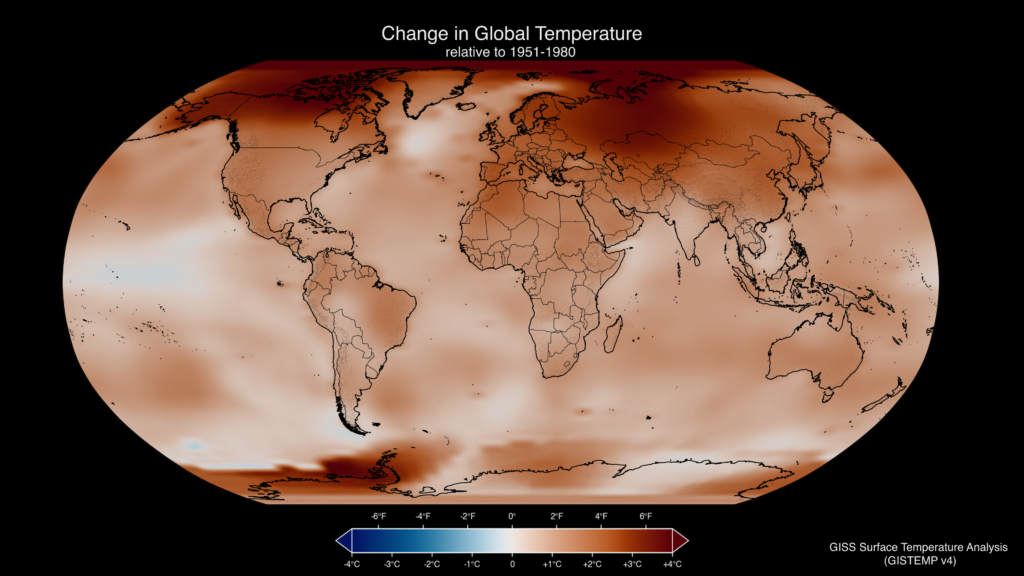
Evidence And Conditional Method
Samira and her planning office are fictional. Evidence is drawn from the IPCC 2023 synthesis, the UNEP Emissions Gap Report 2026, and the October 2026 UNEP and UNFCCC report briefing. Projections are explicitly conditional. The featured NASA temperature graphic shows observed historical change through 2025, not an image of a future coast.