Editorial Update (November 21, 2026): This chapter was revised after its publication-date slot. Its current text may incorporate information and sources published later than that date. The journal’s dates preserve the daily chapter sequence.
The Village That Wanted Reliable Power
In a fictional rural district in 2026, an engineer named Yusuf visited a health clinic with frequent electricity interruptions. The staff hoped to install solar panels and batteries, but they also needed dependable power through cloudy weather and periods of high demand. Yusuf refused to promise that one technology would solve every problem. He asked first what the clinic needed to operate safely and what the community could maintain.
Yusuf and the clinic are imaginary, not a documented project. Their dilemma is real: future energy systems must address reliability, affordability, climate impacts and public access simultaneously. The IEA World Energy Outlook 2026, published on 19 November 2026, examines possible energy pathways under different assumptions. The preceding chapter Climate Pathways And The Choices We Make described how emissions depend upon policy and investment rather than an inevitable future.
Energy Is More Than Electricity
Electricity powers homes, industry and digital services, but societies also use energy through fuels for transport, industrial heat, cooking and other purposes. Transforming electricity generation alone does not resolve every source of greenhouse gas emissions.
Different sectors have different technical requirements. Some can switch to electric equipment relatively easily, while others face obstacles involving cost, materials or production processes. A serious energy pathway includes these distinctions instead of assuming that one power-plant technology solves the whole economy. Planners also need to consider whether energy is delivered where it is required and whether residents can afford the equipment needed to use it. A new plant far from an underserved village does not automatically improve that village’s school, clinic or access to safe cooking. The ultimate practical point of responsible energy policy is useful, affordable, dependable service as well as production.
Scenarios Need Different Assumptions
The IEA’s 2026 outlook analyzes energy futures using scenarios, including a Current Policies Scenario and other modeled conditions. These are conditional frameworks. They do not establish which policies governments will adopt or which technologies will dominate every country by a particular year.
Readers should examine assumptions about population, economic growth, efficiency, investment and energy prices. Different assumptions can lead to different pathways even when analysts begin with the same historical data.
Reliability Is A Public Need
A household needs lighting and communications; a hospital may need uninterrupted power for critical equipment. Reliable service depends on generation, transmission, distribution, maintenance and procedures for responding to failures.
A country can increase its installed generation capacity without eliminating outages if lines, transformers or fuel supply remain inadequate. Evaluating reliability requires examining the entire system and its ability to operate under stress, not just the advertised performance of individual machines.
Affordability Shapes Participation
Energy prices influence household budgets and the ability of businesses to operate. An energy transition that reduces emissions but makes basic services unaffordable for vulnerable users may create serious social harm.
The costs of new systems include equipment, finance, maintenance and networks. Policies can distribute these costs differently through tariffs, taxes, subsidies and public investment. Those decisions require transparent evaluation and should not be disguised as purely engineering choices.
Solar Power Has Strengths And Constraints
Photovoltaic panels convert sunlight into electricity and can be installed at different scales, from small rooftops to large power plants. Their usefulness depends on local sunlight, equipment quality, space, connections and maintenance.
Output varies with time of day and weather. Storage, flexible demand, interconnection and complementary generation may help integrate solar power into a reliable system. A solar panel does not produce the same amount of power every hour, and its climate benefit should be evaluated within the wider energy mix.
Wind Power Requires Suitable Locations
Wind turbines generate electricity where wind resources are sufficient. Their output depends upon weather conditions, turbine design and location. Offshore and onshore projects have different construction, maintenance and transmission requirements.
Local communities may raise concerns about land use, wildlife, noise or the distribution of financial benefits. Project design and public consultation can help address issues, but the appropriate solution depends on place and evidence. Wind power should be assessed through actual operating conditions rather than generic promotional claims.
Hydropower Connects Water And Electricity
Hydropower can provide electricity and, in some arrangements, flexible generation or storage. It also depends on river systems and climate conditions. Dams may influence ecosystems, sediment movement, fisheries and the livelihoods of communities near reservoirs.
Future scenarios should distinguish existing plants from proposed projects whose social and environmental consequences remain uncertain. Water demand and drought risk can affect generation. The value of hydropower is therefore linked to river governance and local rights as well as engineering.
Nuclear Power Presents A Different Tradeoff
Nuclear power can generate large amounts of low-carbon electricity during operation. Its practical adoption depends upon construction capacity, finance, regulation, fuel supply, waste management and institutions capable of overseeing safety.
Large projects can face delays and financial risks, while existing plants may provide reliable power for decades. Public confidence depends on credible regulation and clear communication. There is no basis for claiming that nuclear energy is universally required or universally unacceptable in every national energy pathway.
Fossil Fuels Will Not Vanish By Declaration
Coal, oil and natural gas remain embedded in electricity, transport, industry and heating systems. Their future use will depend on policy, prices, existing infrastructure and alternatives available to users.
A scenario with rapid emissions reductions must explain how plants, pipelines, vehicles and industrial processes change. Delaying new investment while neglecting reliable replacement services can create shortages. Continuing unabated combustion also carries climate and health costs that must be considered.
Efficiency Can Reduce The Scale Of Demand
More efficient appliances, vehicles, buildings and industrial processes can provide useful services with less energy. These improvements may reduce costs and make other system changes easier.
However, energy demand can also rise when services become cheaper or more accessible, an effect sometimes described through rebound behavior. Savings should therefore be assessed through actual use rather than equipment ratings alone. Efficient technology creates possibilities that policy and behavior influence.
Demand Flexibility Can Support A Changing Grid
Some electricity use can be shifted in time without reducing the service people receive. Flexible industrial loads, thermal storage and controlled vehicle charging may help balance supply and demand.
These systems require appropriate prices, communications and safeguards for users. A hospital cannot simply postpone every critical task, and households should not face unfair penalties for needs they cannot shift. Flexibility is useful when designed around practical limits and rights.
Batteries And Storage Serve Different Timescales
Batteries can store electricity for later use, helping households, grids and some transport systems. Their economics and performance depend on chemistry, design, operating conditions and the duration for which energy must be stored.
Longer periods of low renewable output may require additional technologies or strategies beyond common short-duration batteries. Storage should be compared through useful energy delivered, lifetime cost and system needs rather than one headline claim about capacity.
Transmission Lines Are Essential Infrastructure
Electricity may be generated far from the people who need it. High-voltage lines and distribution networks allow power to reach households, factories and public services.
Building networks involves land rights, public consent, finance and technical planning. Delays in transmission can limit the value of new generation projects, while weak local distribution prevents consumers from benefiting from abundant electricity elsewhere.
The earlier chapter The State, The Tax And The Cost Of War examined how institutions mobilize resources. An electricity network similarly depends upon public authority, dependable revenue and the cooperation of communities whose land and livelihoods are affected.
Grids Must Respond To Extreme Weather
Heat, storms, floods and fires can damage generation and transmission infrastructure. Climate change may alter some hazards, while aging equipment or poor maintenance can also create vulnerabilities.
Resilience planning involves backup options, protective design, inspections and procedures for restoring service. No grid can be guaranteed to operate without interruption under every imaginable condition, but preparedness can reduce avoidable harm.
Energy Security Does Not Mean Complete Isolation
Governments consider the availability of fuels, technologies and critical equipment when planning energy systems. International trade can diversify supply, but reliance on a narrow group of suppliers may create vulnerability.
Attempting to manufacture every component domestically can be expensive and may reduce access to efficient technologies. Cooperation, strategic inventories and transparent markets are alternative forms of security. The appropriate balance depends on resources and institutions.
Minerals Connect Energy And Global Trade
Batteries, electricity networks and other technologies require materials whose extraction and processing occur in particular regions. Increased demand can create employment and revenue while also raising environmental, labor and geopolitical concerns.
Supply chains should be evaluated for working conditions, ecological impacts and opportunities for recycling. The social cost of a technology includes more than emissions during operation. Responsible planning considers the entire life of equipment and the people involved in producing it.
Recycling Can Help But Cannot Supply Everything Immediately
Recycling may recover valuable materials from batteries, electronics and other equipment. Its effectiveness depends upon collection systems, product design, available processes and economics.
During rapid growth in a technology, the amount of material reaching end of life may be smaller than demand for new installations. Recycling can contribute to long-term security without removing every need for responsibly managed primary resources.
Energy Access Remains A Development Goal
People without reliable electricity may face limits on education, healthcare, refrigeration and productive work. Clean cooking is another important challenge affecting health and household labor.
The IEA’s energy access resources examine electricity and clean-cooking needs. A fair transition must consider communities seeking their first reliable energy service as well as wealthy societies attempting to reduce emissions from already extensive infrastructure.
Financing Conditions Differ Among Countries
A project with the same technology can have very different costs depending on access to credit, exchange-rate risk and the reliability of revenue. Countries with high financing costs may struggle to deploy equipment that is technically proven elsewhere.
Public guarantees, development finance and transparent regulation can help under appropriate conditions, but they also create obligations and risks. Financing arrangements should be evaluated for long-term sustainability rather than through announced investment totals alone.
Community Ownership Is One Possible Model
Some communities establish energy cooperatives or local projects that offer residents a share in governance and benefits. Such arrangements may improve accountability where institutions have the necessary skills and financial capacity.
They are not universally easy to organize, and local projects still need maintenance, safety and grid coordination. Governance matters as much as ownership labels. A community system can fail if responsibilities remain unclear or future repairs are unfunded.
Energy Jobs Will Change
Transitioning energy systems can expand opportunities in installation, manufacturing and maintenance while reducing work in other industries. Skills, locations and employment conditions differ, so new jobs may not immediately replace those lost in particular towns.
Planning for workers can involve training, income support and investment in affected regions. A promise of future national employment growth does not automatically protect one household facing the closure of a plant or mine.
Electric Transport Is Not One Uniform Solution
Electric vehicles can reduce tailpipe emissions and support lower-emissions mobility when electricity and manufacturing are considered appropriately. Their practicality depends on charging, prices and vehicle needs.
Public transport, walking infrastructure, efficient freight and urban planning may provide other benefits. A transition focused only on replacing private cars risks overlooking people who cannot afford one or who need safe alternatives.
Industrial Heat And Materials Need Attention
Steel, cement, chemicals and other industries use energy and may produce emissions through both fuel combustion and chemical processes. Their transition can be more difficult than replacing certain household appliances.
Possible approaches include efficiency, changes in production methods, electrification, hydrogen in suitable applications and carbon management under constrained conditions. None should be declared universally decisive without examining specific technologies and costs.
The IEA’s November 2026 Evidence Checkpoint
The World Energy Outlook 2026 provides scenario analysis using information available at publication on 19 November 2026. It is useful for comparing policies and risks, not for stating that one technology’s market share in 2050 is already known.
Reports issued in later years may reach different estimates as policy, costs and technology change. A responsible journal identifies its evidence date so readers can separate the present record from the pathway being explored.
Energy storage and transmission planning require attention to timescale. A battery that supports a building for a few hours during a blackout addresses a different problem from balancing electricity supply across a season with unusually low wind or changing rainfall. Engineers may combine storage, flexible generation, regional interconnections and demand management to address those needs. The appropriate combination depends on cost, reliability standards and the geography of the network. Comparing technologies without describing the service they must provide can make a system appear cheaper or more reliable than it would be in practice.
Energy policy also affects public health in ways that can be measured before the longer-term climate benefits are fully visible. Burning fuels can produce air pollutants whose local impacts depend on equipment, location and regulation. Reducing harmful emissions may improve air quality near homes and workplaces, while changes in cooking technology can affect indoor exposure. Health benefits should be evaluated using suitable local evidence. A technology that reduces greenhouse gases is not automatically free from all other environmental or health consequences, so policy needs more than one performance indicator.
The design of electricity tariffs can influence who bears infrastructure costs. A fixed charge may secure revenue for a utility but impose a greater burden relative to income on a low-use household. A poorly designed subsidy may reduce bills for wealthy users while failing to connect remote residents. Regulators need data about service quality, affordability and the financial condition of the network. The distribution of costs deserves public scrutiny because electricity is essential to many other opportunities, from education and refrigeration to participation in the digital economy.
Industrial transitions require coordination with workers and local governments. A town built around a coal mine may depend upon wages, supplier businesses and public revenue from the same industry. Training programs are less useful if they prepare people for jobs that do not exist nearby or require travel families cannot afford. Economic diversification, worker participation and credible financing can reduce disruption. The promise of a future low-emissions economy should be tested against practical conditions for those who will experience the transition most directly.
International supply chains also create opportunities for cooperation. Countries can share technical standards, exchange electricity through regional networks or coordinate research on safer materials and more efficient equipment. Such arrangements may reduce costs or improve resilience, but they depend upon political trust, clear rules and investments in infrastructure. A country with a strong renewable resource may still need agreements enabling power to reach neighboring markets. The history of the internet in Scientific Inquiry And The Authority Of Evidence likewise shows how shared methods help institutions build on one another’s work.
The physical life of energy equipment also matters. Solar panels, wind turbines, transmission lines and power stations may operate for decades, making early design choices consequential. Maintenance, replacement parts and skilled technicians must be available throughout that period. A project can appear successful at the opening ceremony yet become unreliable if funding covers construction but not operation. Scenario analysis should therefore compare whole-life costs and include credible arrangements for future repairs, waste handling and eventual replacement.
Not all decarbonization options are equally mature. Some technologies already operate widely, while others are at earlier stages of demonstration, development or commercial adoption. A model may include future performance improvements, but those assumptions should be visible. Analysts need to test whether a pathway remains workable if a promising technology becomes more expensive or takes longer to deploy. This prevents a future-oriented plan from relying upon a breakthrough merely because the breakthrough would make the mathematics convenient.
Energy transitions can also affect land and cultural heritage. Large infrastructure projects may require rights of way across farmland, grazing routes or sites important to local communities. Consultation should occur early enough to influence location and design rather than after irreversible commitments have been made. Compensation alone may not address every effect of displacement. A project justified by global environmental benefits still has obligations toward people whose daily lives and property are directly affected.
The unequal distribution of technical knowledge can itself constrain choices. Communities may lack independent expertise to evaluate proposals presented by vendors or international financiers. Universities, regulators and public agencies can support access to reliable information and training, allowing local institutions to compare alternatives rather than accept a single commercial promise. The old chapter The State, The Tax And The Cost Of War helps explain why such capacity is a form of practical sovereignty. Formal authority offers little protection if a government cannot evaluate contracts or maintain essential infrastructure.
Finally, energy futures should be evaluated through outcomes people recognize. Reliable power can keep medicines refrigerated, support a workshop or allow children to study after dark. Lower emissions reduce an important source of climate risk, but a fair system must also consider affordability and the people who maintain it. No single metric captures every goal. Explicit tradeoffs and transparent review help institutions choose policies that can adapt as prices, technologies and local needs change.
The Clinic Needs A System, Not A Slogan
In the fictional ending, Yusuf recommends evaluating the clinic’s essential equipment, expected demand, solar resources, storage and maintenance capacity. He does not claim that one arrangement is right for every settlement.
Energy futures involve genuine technological possibilities alongside financing, reliability, environmental and social tradeoffs. The next chapter examines food, water and ecological resilience, where energy choices interact with agriculture and the systems supporting daily life.
Historical Evidence And Scenario Disclosure
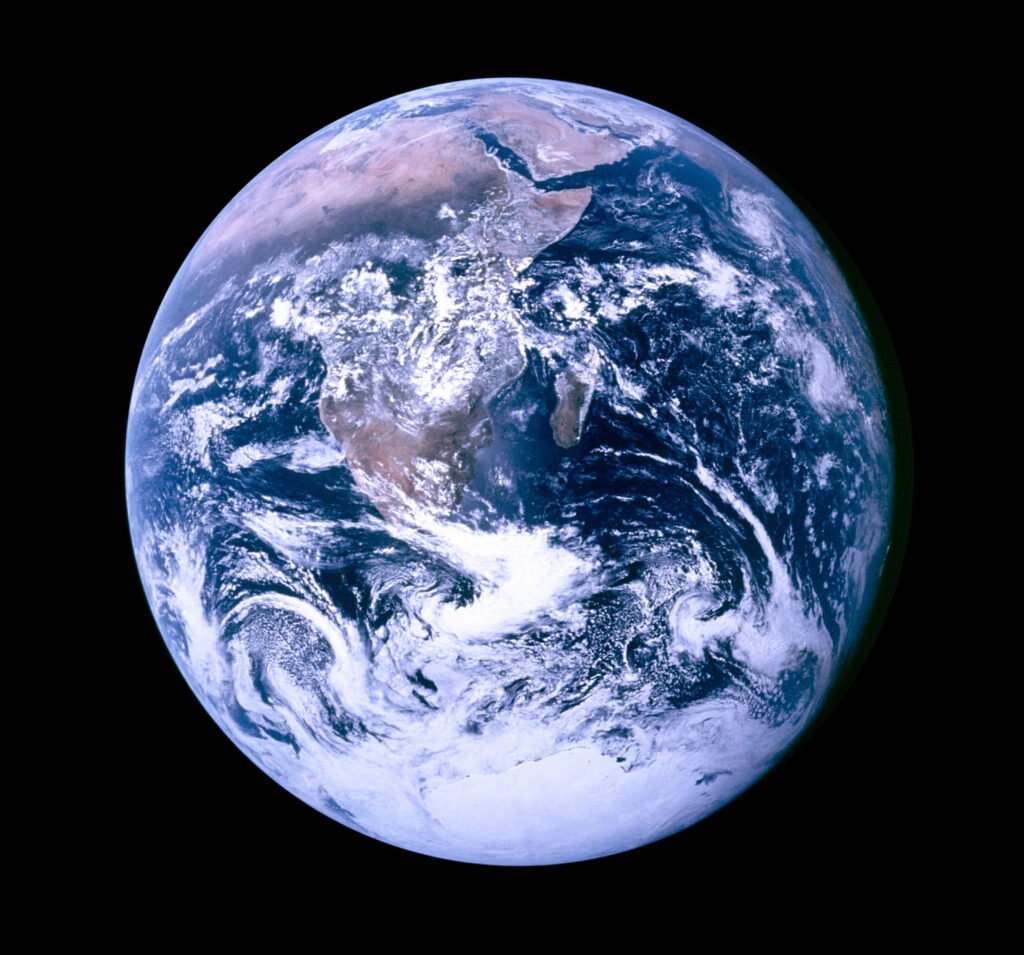
Yusuf and the clinic are fictional. Main sources include the IEA World Energy Outlook 2026, the IEA topic on energy access, the IPCC Synthesis Report and the UNEP Emissions Gap Report 2026. All future pathways are conditional. Featured media is an actual NASA photograph of Earth from 1972, not a depiction of a future energy system.