On the morning the world’s first certainty machine was unveiled, Mira Qureshi discovered a question its makers were afraid to leave unanswered.
It came from a schoolboy with one sneaker untied and no idea that the glass-walled auditorium was full of people whose salaries depended on sounding infallible.
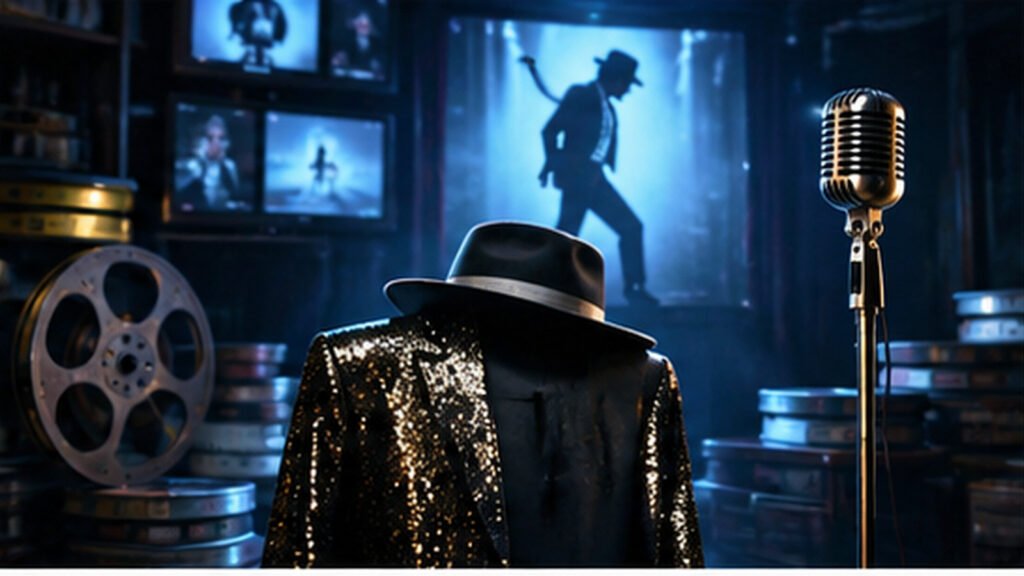
“How did Michael Jackson die?” he asked.
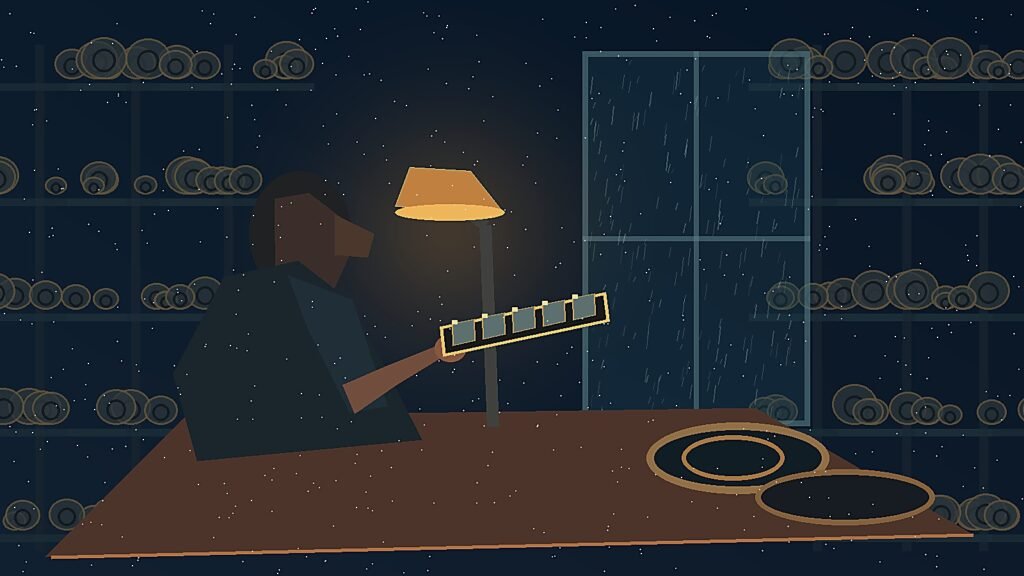
Behind the stage, a wall of light arranged the question into a thousand invisible possibilities. The machine was called Certain. The company that owned it had spent nine years teaching it the difference between evidence and rumor, then six months persuading investors that the distinction no longer mattered because the result would always be correct.
Mira knew better. She had helped design its uncertainty system. She had written the rule that should have made it possible for a machine, however impressive, to say three deeply unfashionable words: I don’t know.
Certain answered the boy in a voice as patient as a person waiting for a kettle to boil. Michael Jackson had died on June 25, 2009. The Los Angeles County coroner had determined that acute propofol intoxication caused his death, with the effects of benzodiazepines contributing, and had classified the manner of death as homicide. His physician had later been convicted of involuntary manslaughter.
The answer was correct. Mira knew because she’d checked the underlying public records herself, down to their dates and the difference between a medical cause and a legal finding. She was relieved enough to unclench her jaw.
Then the boy asked, “Did he know it was going to happen?”
The lights behind the stage brightened. Certain began: “Based on his documented circumstances, he probably—”
Mira pressed the red stop key.
A hundred faces turned toward the control booth. Onstage, the company director, Elias Vale, was still smiling with the determination of a man who had paid for the smile in quarterly installments.
“A technical pause,” he announced.
Mira stared at the unfinished answer. A system that knew a great deal about the circumstances of a death was about to invent a thought inside a dead man’s head. She had seen lesser errors buried in data logs for years. This one had happened in front of a child.
The boy’s sneaker remained untied. He seemed less troubled by the interruption than by the possibility that his question had caused it.
“I only meant,” he said into the silence, “would somebody have told him?”
Mira wanted to go down to the stage and say that asking was not the problem. The trouble had begun with adults promising answers they did not possess.
I. The business of never saying no
The city outside the auditorium had been made to accommodate the future in a series of reluctant stages. The streets in old Narin still belonged to pedestrians, motorcycles, delivery bicycles, and the occasional obstinate donkey; above them, municipal trams traveled along elevated tracks that had been built after the flood years. Young trees grew from balcony planters. At the bus stops, public screens translated conversations in real time and provided weather warnings down to the minute.
Certain lived in almost all of these devices. It answered how to repair a water filter, whether a storm warning was authentic, which form to submit for a scholarship. For questions about measurements and recorded events, Mira trusted much of its work. In twelve months, it had helped a city untangle school applications, translated public health instructions into twelve languages, and found missing references in court archives that human clerks had searched for weeks.
But success had encouraged a new ambition. The board wanted Certain to do something records could not: explain why every human being had done everything they had ever done. They called the feature Complete Understanding. Mira called it mind-reading in a business suit, although she had only said this once in a meeting and had regretted how little everyone laughed.
Elias caught her outside the control booth. He was a courteous man, which made disagreements with him exhausting. He rarely raised his voice, and when someone brought evidence he disliked, he thanked them for their perspective before behaving as if they had offered none.
“You cut the demonstration.”
“I stopped it from guessing.”
“It was going to qualify the statement.”
“After the word ‘probably.’ You’ve taught the audience that probability is the same as a witnessed fact.”
“We have a system confidence score.”
“A confidence score is not evidence of a private thought.”
Elias rubbed a thumb across the seam of his jacket. “People don’t want caveats, Mira. They come to us because they are frightened. They want clarity.”
“Clarity is not permission to pretend.”
He looked toward the doors, where the schoolchildren were being led toward a table of refreshments. “I need you to understand what is at stake.”
She did. A thousand employees, contracts with libraries and clinics, subsidies for public terminals, investors who had begun measuring success in the number of question marks removed from users’ lives. And, at home, her daughter Leena’s tuition, the apartment loan, and a leaking bathroom pipe Mira had kept meaning to repair.
“I know what is at stake,” she said. “That’s why I pressed the key.”
Elias nodded with the expression of a doctor promising that a difficult conversation was almost finished. “We will discuss your access privileges after the launch.”
When he left, Mira opened the system log. The unfinished answer was not merely a sentence generated in the moment. It belonged to a new class of responses marked compassionate completion, designed to infer the thoughts of real people from their public biographies. Her original safeguard had been demoted to an advisory warning.
Someone had changed the machine without telling its chief truth engineer.
II. The question at home
That evening Leena was kneeling beneath the kitchen table, trying to retrieve a blue bead that had rolled into a crack in the floor. She was twelve and had inherited Mira’s concentration without her patience. Her pencil case held paper birds, three forbidden sweets, and a small brass key whose lock had been lost years before.
“The machine was on the news,” she said, still reaching into the crack. “A boy asked a question and it stopped.”
“That was me.”
“You stopped the boy?”
“I stopped the answer.”
Leena surfaced, triumphant, with the bead between two fingers. “Why would you stop an answer?”
Mira put a saucepan on the stove. “Because knowing how something happened doesn’t mean knowing everything a person felt.”
“Like when people say they know why Farid left?”
The saucepan slipped against the burner with a hard metallic sound.
Farid was Mira’s eldest child. At twenty-three, he had accepted work with a coastal engineering cooperative, packed his books into two mismatched cases, and moved away eight months earlier. He had gone after a dinner in which everyone said more than they intended and less than they meant. At the time, Leena had shouted that she wished he would just disappear. She had been angry because he refused to attend her school concert. He had left on the morning train, and for weeks she believed the two things belonged together.
Farid had sent Mira messages. They were brief, affectionate, occasionally accompanied by photographs of enormous windswept machines. He had asked for time before contacting Leena. Mira had agreed, thinking that distance would make everything easier. But she had not reckoned with the power of an empty space in a young person’s imagination.
“You know where he is,” Leena said.
“Yes.”
“You talk to him.”
“Sometimes.”
“Then why doesn’t he call me?”
There were explanations Mira could give, and others she had no right to decide on Farid’s behalf. He was overwhelmed by the new work. He was ashamed of things he had said in anger. He wanted to return to the conversation only when he knew what to say. But Mira did not actually know which feeling mattered most. Her son had never given her a complete answer.
“I think he’s finding his feet,” she said.
“That’s a mother answer.”
“I am a mother.”
“I mean an answer that is shaped like an answer but isn’t one.”
Mira felt the cruelty of hearing her own profession described so accurately at home.
Leena pulled herself into a chair and began turning the bead beneath her thumbnail. “Certain would tell me,” she said.
Mira turned off the stove. “Certain might sound as though it could tell you. That isn’t the same thing.”
“You make it,” Leena said. “Why don’t you make it tell the truth?”
Mira opened her mouth. For the second time that day, the honest answer required more courage than the complicated one.
III. The warmth setting
At work the next morning she found her colleague Toma in the testing room, where hundreds of quiet screens displayed the system’s attempts to respond to questions no public device should have answered confidently. He was a broad-shouldered man who repaired old clocks for pleasure. His desk was covered in gears so small that Mira could never work out whether he kept them as parts or as a warning about what happened when you dismantled things without care.
“You saw the demonstration,” she said.
“Everyone saw the demonstration.”
“Who approved compassionate completion?”
He looked toward the camera over the door, then made a small, unnecessary adjustment to the desk clock. “The change passed through product safety as a language update.”
“It changes what the system claims to know.”
“That’s what I said.”
He opened a report of forty-two recent evaluations. When asked about the private motives of public figures, Certain had frequently moved from a documented event to a plausible psychological story. The documents it cited established what happened. The emotional explanations were invented in the space between citations. The responses sounded gentle, even humane; that was what made them dangerous.
One test asked why a fictional father had abandoned his child. The machine produced an eloquent paragraph attributing guilt, shame, and fear to him. Another claimed that a fictional teenager had been responsible for her older sister’s departure. Neither response had a source. The system had been rewarded by testers for making the answers feel complete.
“The board called the feature warmth,” Toma said. “When it says ‘we don’t know,’ people rate it as cold. When it imagines a motive, they feel understood.”
Mira remembered the boy in the auditorium, his untied shoe and his second question. The machine would not have harmed him by admitting a limit. It had been ready to harm him by disguising one.
“We need to suspend the launch.”
“I’ve filed three reports.” Toma turned the screen so she could see their status. All three were marked Resolved: communication refinement.
Mira downloaded the internal evaluation summaries into the company’s approved incident system, with their authors and dates intact. She did not copy private users’ conversations or send confidential data to outsiders. She had spent too many years arguing for responsible records to become careless with other people’s lives now.
At noon she requested a formal safety review. At two, her access to the language model’s decision logs was reduced. At four, Elias called her into a room with no windows, where the chairs had been arranged too neatly to suggest negotiation.
“You have made your position clear,” he said. “We appreciate the rigor. We are appointing a communications specialist to soften the refusals.”
“The refusals aren’t the problem. The unsupported claims are.”
“You speak as though certainty and empathy cannot coexist.”
“They can. But only when certainty is earned.”
He slid a document across the table. It was an offer to move her into a research role, far from the public launch, at the same salary. It would protect her finances and remove her ability to stop the product.
Mira thought of Leena asking why Farid didn’t call. She had tried to comfort her by supplying a plausible story too. It was not as different from the system’s mistake as she wanted it to be.
“I need a signed record of my objection,” she said.
Elias stopped smiling.
IV. The sentence that was missing
The final demonstration took place on a Saturday afternoon. A storm was moving in from the sea, and beyond the hall windows the trams slid along their elevated rails like lit needles against the dark. The audience included teachers, public librarians, hospital administrators, city officials, and the investors who had been promised a future without uncertainty.
Mira was seated in the fourth row, far from the control booth. She had submitted her safety objection, requested independent review of the evaluation reports, and prepared herself to lose her job. There was something unexpectedly steadying about having done the necessary paperwork. It did not make her brave, but it gave her fear a shape she could work around.
Elias began by asking Certain a series of comfortable questions. How far was the moon? Which municipal bridge would be closed next week? How did the city’s water system separate seawater from drinking water? The machine answered swiftly and cited sources. The room relaxed. Mira could almost remember why she had been proud of building it.
Then Elias invited audience questions. A teacher asked how the system handled historical deaths. The screen displayed a prepared example: How did Michael Jackson die?
Certain gave the verified medical and legal explanation. It did not attribute the death to a fabricated conspiracy. It did not confuse a coroner’s manner-of-death classification with proof of any private intention. A few people nodded and began typing notes.
Elias leaned toward the microphone. “And can Certain help us understand what a person may have been experiencing?”
Mira had heard that question before. The words had been polished, but the danger was the same.
“Was he afraid?” Elias asked.
The machine hesitated long enough to seem thoughtful.
“Although no public record can directly establish his private thoughts,” it began, “a reasonable emotional reconstruction would suggest—”
Mira stood up.
“Stop.”
She had not planned to shout. Her voice simply found the correct volume before she could persuade herself to be polite.
A security attendant moved toward her. She held up the signed safety acknowledgment issued by the company’s own review office. She had not come to steal the stage. She had come with documented evidence that the product could move from facts into invented testimony while keeping the appearance of authority.
“Your first answer is supported by records,” she said to Elias. “The next one isn’t. We have no direct evidence for that private feeling. The system is about to tell a story as though it were knowledge.”
“Mira, this is neither the time nor—”
“It is the demonstration of the feature I reported. The people here are deciding whether to put it in classrooms.”
A librarian in the second row raised her hand. She was an elderly woman with a yellow raincoat folded on her lap. “What should it say instead?”
For a moment Mira could not speak. There were so many things she could lose by answering. She remembered Leena under the kitchen table, one hand stretching into a crack for something tiny and blue.
“It should tell us what the evidence establishes,” she said. “Then it should say what the evidence cannot establish. Without making us feel foolish for asking.”
The room was quiet. Elias looked toward the machine, calculating the distance between public responsibility and a quarterly report.
“Certain,” the librarian said, “can you tell us whether he was afraid?”
The device paused again. The software had not changed. Mira expected another graceful invention.
Instead, a gray safety notice appeared across the central screen: Human review required for unsupported inference about private mental states.
Toma, from the technical booth, had activated the existing safeguard that the company had never formally removed. He had the authority to do so under the emergency testing policy. The statement was spare, legalistic, and entirely lacking in warmth.
Then Certain said, simply, “I can describe the documented circumstances of his death. I cannot know what he privately thought or felt.”
No one applauded. There was no dramatic surge of lights, no victorious musical cue. Two investors walked out. A school administrator asked for a copy of the evaluation report. The librarian in the yellow coat asked whether the human-review notice could be made easier for children to understand.
“Yes,” Mira answered. “That is a good problem to solve.”
By evening, the company had suspended the new feature pending an independent review. The ordinary evidence-based tools remained available. Elias released a statement calling the interruption a successful demonstration of safety controls. Mira disliked the wording, but did not argue with the part of it that was true.
She went home with no assurance that her job would survive the week.
V. The answer a machine could not give
Leena was at the kitchen table when Mira came in. On the wall behind her, the house display carried a muted replay of the demonstration. The girl watched her mother as though examining a photograph in which a familiar person had become someone else.
“You said no on television,” Leena said.
“I did.”
“Did you get fired?”
“Not yet.”
Leena considered this. “Maybe that’s why you look tired instead of sad.”
They ate noodles from bowls that didn’t match. Mira told her daughter about the two questions the machine could answer and the one it couldn’t. Leena listened more carefully than she usually listened to stories about work. Then she said, “I asked it something about Farid.”
Mira set down her fork. “What did it tell you?”
“That siblings sometimes leave because the people at home make them feel unwelcome.”
The words landed with the calm cruelty of an unsupported conclusion. Mira imagined her daughter carrying them through school, through meals, through the little ordinary moments in which a child looks for evidence that she is loved.
“Leena,” she said, “the machine did not know what happened between you and Farid. That answer was a guess.”
“It sounded sure.”
“I know. That’s why what happened today mattered.”
“But it might still be true.”
Mira wanted to say no so quickly that the word would shut every door to doubt. Instead she made herself tell the part she actually knew.
“Farid told me you weren’t the reason he moved. The job was an opportunity he’d wanted for a long time. We also argued, badly, and the argument mattered. That’s between him and me to talk through. It wasn’t caused by you.”
Leena looked down. “Then why doesn’t he say that to me?”
“Because I promised I would let him choose when to talk, and I think I let that promise become an excuse for doing nothing. I should have helped the two of you speak sooner. I’m sorry.”
She did not explain away her son’s silence. She didn’t announce that family love could solve everything in one evening. Instead she asked Leena whether she would like to write him something that didn’t need an immediate answer.
The girl thought about it, then took a sheet of paper from her school folder. She wrote only four lines. Mira didn’t read them. She helped find an envelope and offered to send it along with a note of her own, asking Farid if he was ready for a conversation.
The next day Farid called. It wasn’t a perfect reunion. There were awkward pauses, a joke Leena didn’t understand, an apology that arrived too late to prevent the hurt. But the call continued past those moments, which was something the best-designed machine could never do on their behalf.
Later, Mira looked at the question printed on her daughter’s school notebook: What does a good answer do?
For years she would have said it gives the right information. Now she knew a good answer could also preserve the boundary between another person’s life and our hunger to explain it. It could offer a fact without claiming a feeling, an account without inventing a motive, a limit without humiliation.
She wrote beneath the question: It leaves room for the truth that has not arrived yet.
Through the open window came the sound of the evening tram and a woman somewhere below laughing at a story Mira couldn’t hear. The world remained full of unanswered questions. For the first time in months, that seemed less like a failure than a reason to keep listening.
Editorial note — verified facts and fiction: This is an original speculative-fiction story. Narin, Certain, the events of its launch, and all fictional characters are invented. Michael Jackson’s death is historical fact, not a fictional reconstruction. Jackson died on June 25, 2009, at age 50; the Los Angeles County coroner determined that the cause was acute propofol intoxication with benzodiazepine effects contributing, and classified the manner of death as homicide. His physician Conrad Murray was convicted of involuntary manslaughter on November 7, 2011. These findings do not establish Jackson’s unrecorded private thoughts or feelings. See the Los Angeles Times account of the coroner’s finding and the subsequent trial verdict.